Regenerative Medicine · Joint Care
Stem Cell & Regenerative Medicine for Joint Care
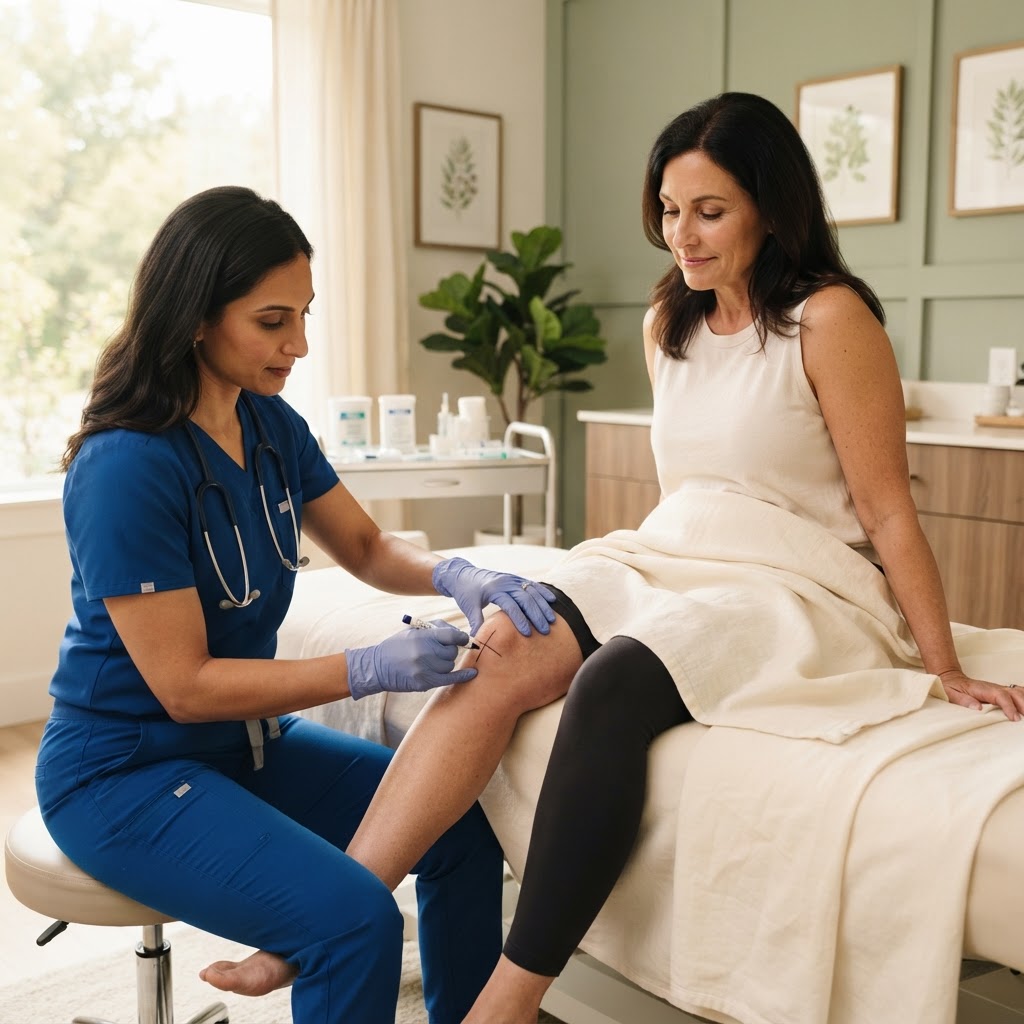
If your knees ache on the stairs, your shoulder complains every time you reach overhead, or your hip has started deciding how far you can walk, you have probably heard the same two options: manage the pain, or replace the joint.
Regenerative medicine — including PRP and cell-based (stem cell) therapies — is a third path that has grown quickly in the last decade, and it is one of the most requested topics in our Sherwood clinic. This guide explains what these treatments are, how they are used for joints, which patients they tend to help, and where the honest limits are.
Non-Surgical
Injection-based
Minimal Downtime
Most return to their day
Uses Your Biology
PRP & cell-based
Provider-Led
Evaluated in person
What Regenerative Medicine Actually Means
Traditional joint care has two lanes: quiet the pain, or replace the joint. Regenerative medicine opens a third — treatments that use your own biology to calm inflammation and support the joint's ability to repair itself. Instead of only masking a symptom, the goal is to change the environment inside the joint so it can function better.
That shift in thinking matters most for knees, shoulders and hips with early-to-moderate osteoarthritis, tendon injuries, and joints that are not yet ready for — or not ready to accept — surgery.
- Aims at the joint environment, not just the pain signal
- Delivered as injections, usually in minutes
- Often used in combination rather than alone
How Stem Cell Therapy Is Used for Joints
The cells used most often in orthopedics are mesenchymal stem cells (MSCs), typically sourced from umbilical cord or Wharton's jelly tissue or from a patient's own bone marrow. Injected into an arthritic or injured joint, these cells do not simply "grow new cartilage." Their better-documented role is signaling: they release growth factors and cytokines that calm chronic inflammation and support the tissues already there.
That is why cell-based therapy is usually reserved for joints with some cartilage still present. In a knee that is already bone-on-bone, no injection reliably rebuilds the joint — and honest providers will tell you so.
- Mesenchymal stem cells, given by injection
- Focused on reducing inflammation and supporting repair
- Most useful in mild-to-moderate joint changes
PRP: Regenerative Medicine From Your Own Blood
Platelet-rich plasma is the most common regenerative treatment in clinics today, and for good reason: it uses your own blood, so there is no foreign substance and no rejection risk. We draw a small sample, concentrate the platelets, and inject that concentrate into the damaged joint or tendon. The platelets release growth factors that reduce inflammation and encourage the tissue to heal.
Published evidence is strongest for knee osteoarthritis, tennis elbow and other tendon problems. Response is not instant — it usually builds over four to eight weeks, and many patients need a short series rather than a single injection.
- Made from your own blood, no additives
- Best-supported for knees and tendons
- Benefits typically build over weeks
Where Hyaluronic Acid and Steroids Fit In
Regenerative therapy rarely works in isolation. Corticosteroid injections can settle a severe flare in days, opening a window where you can move and do your rehab. Hyaluronic acid restores the lubricating fluid in a knee thinned by osteoarthritis, which reduces friction and pain for months at a time.
Depending on your joint and your goals, the right plan may be one of these alone, a combination, or a sequence — steroid first for relief, then a regenerative treatment once the flare has quieted.
- Steroids for fast, short-term inflammation control
- Hyaluronic acid for cushioning and lubrication
- Sequencing often matters more than any single shot
What Results Are Realistic?
Regenerative joint care is not a cure for arthritis, and it is not a permanent fix. What patients commonly report is meaningful pain reduction and better function that lasts months, sometimes longer — enough to delay or avoid surgery, keep working, and stay active. Some patients respond dramatically; others get little relief at all, and we cannot predict in advance which group you fall into.
Insurance generally does not cover regenerative injections, so these are cash-pay services. Many of the specific products used are not FDA-approved for arthritis, which means they are used off-label — an important detail we discuss openly before any treatment.
- Pain and function improvements that typically last months
- Response varies widely between patients
- Usually cash-pay; discussed transparently first
Who Tends to Be a Good Candidate?
The single biggest factor is how much joint structure is still there. Regenerative injections work best in a joint that is irritated and worn but not destroyed. During your evaluation we check your range of motion, review any imaging, and ask what you want to get back to — then we tell you plainly whether these treatments are worth your money or whether a different path would serve you better.
Often a good fit
- Mild to moderate knee, hip or shoulder osteoarthritis
- Tendon and ligament injuries, such as tennis elbow
- Looking to delay or avoid joint replacement
- Wanting to stay active without daily pain medication
Usually not the right choice
- Advanced bone-on-bone changes with little cartilage left
- Active infection or a skin infection over the joint
- Active cancer, or certain blood and immune conditions
- Uncontrolled bleeding disorders or pregnancy
What a Visit Looks Like
Evaluation
We review your history, examine the joint, and look at any imaging you already have. No commitment to treatment at this visit.
A plan, in plain terms
We recommend a specific approach — PRP, hyaluronic acid, steroid, cell-based therapy, or a combination — with the cost and the realistic timeline spelled out.
The injection
Most injections take only a few minutes in our Sherwood clinic. You can drive yourself home and return to normal activity the same day, with a short period of taking it easy on the joint.
Follow-up
We check in at four to six weeks, when most patients can tell whether it is working, and adjust the plan from there.
The Bottom Line
Regenerative medicine has given patients a genuine alternative to living on pain medication or going straight to surgery — and for the right joint, at the right stage, the results can be meaningful. It is not a cure, and it is not for every knee. The only way to know which category you are in is an in-person evaluation with a provider who will be straight with you about the odds.
Regenerative therapies, including PRP and cell-based products, are not FDA-approved as a cure for osteoarthritis and are frequently used off-label. Individual results vary, and no treatment can restore a joint that has lost most of its cartilage. This article is educational and is not a substitute for a personal medical evaluation.
Related Service
Find out if regenerative joint care fits you
PRP, hyaluronic acid and steroid joint injections, evaluated in person at our Sherwood clinic — with a clear plan and honest expectations.
Explore Joint Care